
The $26B+ RWA Market: What Tokenized Real-World Assets Reveal About the Future of Capital Formation
Tokenized real-world assets have crossed more than $26B in distributed on-chain value, signaling a major shift in how capital, compliance, liquidity, and access may evolve.
The $26B+ RWA Market: What Tokenized Real-World Assets Reveal About the Future of Capital Formation
Tokenization is no longer just a prediction.
The real-world asset market has crossed more than $26B in distributed on-chain value, showing that tokenized assets are moving from experimentation into real financial infrastructure.
For years, tokenization was discussed as a future possibility. Real estate could be fractionalized. Private funds could become easier to access. Bonds could settle faster. Investors could participate in opportunities that were traditionally difficult, slow, or restricted.
Now, that future is starting to appear.
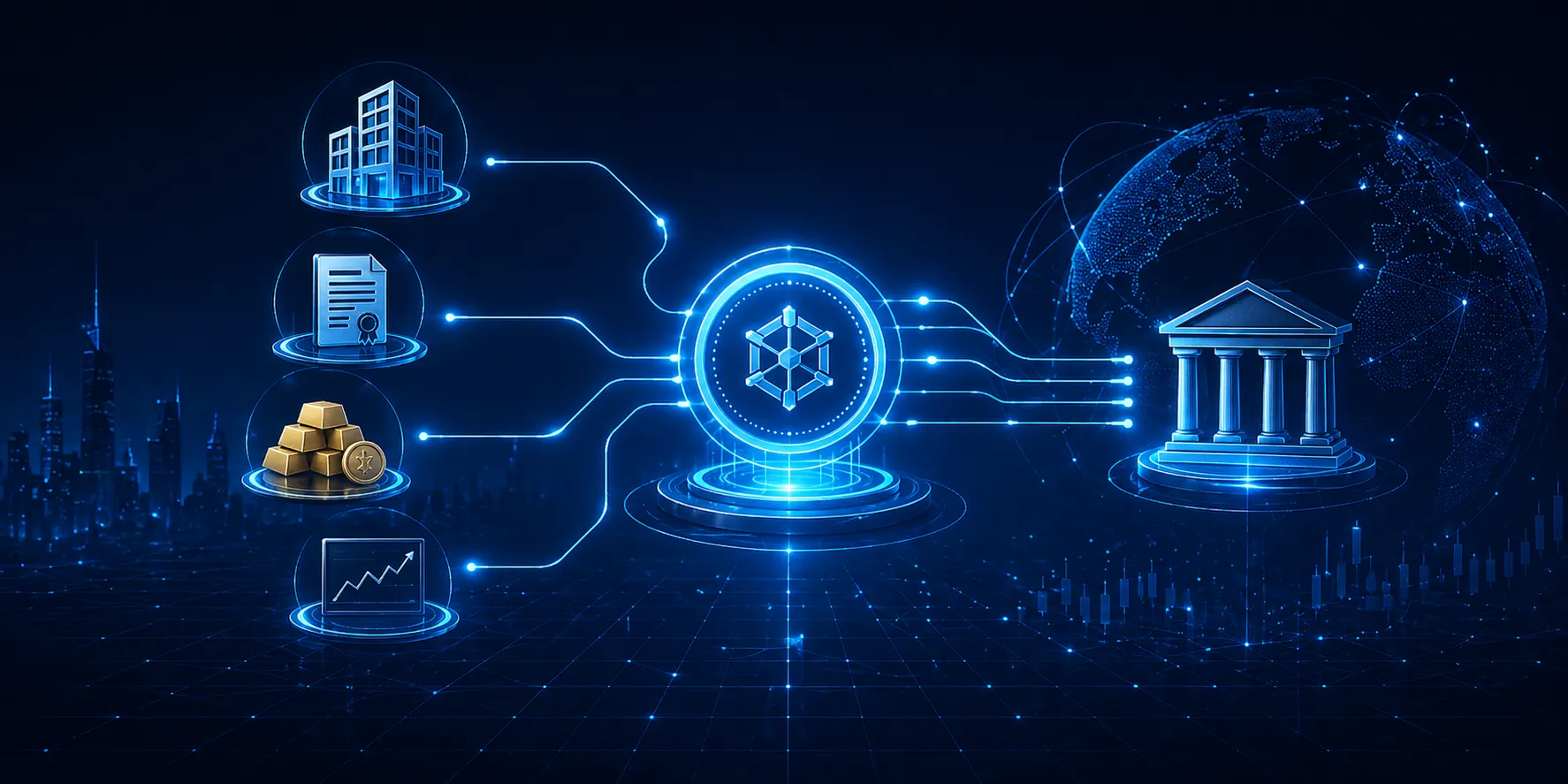
Tokenized treasuries, private credit, commodities, funds, real estate, and other financial assets are becoming part of a growing market. This is not only a crypto story. It is a capital formation story.
Tokenization is changing how assets can be issued, distributed, managed, and accessed.
---
Why the $26B+ RWA Market Matters
The most important signal is not only the size of the market.
The real signal is what this growth represents.
A market above $26B shows that institutions, issuers, investors, and infrastructure providers are beginning to accept one important idea:
Financial assets do not need to remain trapped inside outdated systems.
Traditional capital formation is often slow, expensive, fragmented, and difficult to access. Issuers face complex onboarding, legal paperwork, investor verification, settlement delays, limited distribution, and high intermediary costs.
Tokenization does not remove every challenge.
But it creates a new foundation.
A tokenized asset can include ownership data, investor permissions, transfer rules, compliance logic, settlement mechanics, and reporting infrastructure in a digital format.
That creates the potential for financial products that are easier to issue, easier to manage, and potentially easier to access.
This is why the growth of tokenized real-world assets matters.
It shows that tokenization is not only about creating digital versions of assets.
It is about upgrading the infrastructure of capital markets.
---
The First Wave: Institutional Yield and Financial Assets
The strongest early traction in tokenization has come from assets with clear demand.
These include:
- Tokenized U.S. Treasuries
- Tokenized money market funds
- Private credit
- Commodities
- Corporate debt
- Institutional funds
- Real estate-linked products
This makes sense.
Investors are not adopting tokenized assets only because they are on-chain. They are adopting them when the structure solves a real problem.
Tokenized treasuries and money market products became popular because they offer access to familiar yield-bearing instruments through digital infrastructure.
Private credit is also becoming one of the most important RWA categories. It is a large market, but one that has historically been difficult to access, difficult to monitor, and difficult to trade.
Tokenization can improve how these products are structured, distributed, reported, and transferred.
That is why the first wave of tokenization is focused on assets that already have strong institutional demand.
The technology is not creating value out of nothing.
It is making existing value easier to access, manage, and move.
---
Tokenization Is Changing Investor Access
One of the biggest promises of tokenization is broader access.
In traditional finance, many private market opportunities are limited to large institutions, funds, or accredited investors. The process is often slow and paper-heavy. Minimum investment sizes can be high. Secondary liquidity can be limited. Investor onboarding can be repetitive and inefficient.
Tokenization can help change that.
A compliant tokenized structure can support:
- Fractional ownership
- Digital onboarding
- KYC and AML checks
- Investor qualification
- Transfer restrictions
- Transparent ownership records
- Faster settlement
- More efficient reporting
- Potential secondary market access
This does not mean every asset should be open to everyone.
Responsible tokenization still requires compliance, regulation, investor protection, and clear legal rights.
The future is not uncontrolled access.
The future is compliant access.
The platforms that win will not simply issue tokens. They will create trusted systems where investors, issuers, and regulators can clearly understand how the asset works.
---
Issuing Tokens Is Not the Same as Creating Liquidity
One of the most important lessons in the RWA market is simple:
Tokenization does not automatically create liquidity.
An issuer can tokenize an asset, but that does not mean investors will trade it.
Liquidity requires much more than a token.
It requires:
- Investor demand
- Clear legal structure
- Trusted custody
- Compliant transfer rules
- Transparent pricing
- Reliable asset reporting
- Secondary market infrastructure
- Regulatory alignment
- Market confidence
This is where many early tokenization projects struggled.
They focused too much on the token and not enough on the market around the token.
A real tokenization platform must answer important questions:
- Who is allowed to invest?
- How are investors verified?
- What legal claim does the token represent?
- Where is the underlying asset held?
- Can the token be transferred?
- Can it be traded?
- Who manages compliance?
- How are investors updated?
- What happens if the issuer defaults?
- What happens if regulation changes?
These are not small details.
They are the difference between a digital experiment and a serious financial product.
The next phase of RWA growth will depend on infrastructure that connects issuance, compliance, custody, reporting, investor communication, and liquidity.
---
Why Institutions Are Taking Tokenization Seriously
The institutional signal is becoming stronger.
Banks, asset managers, exchanges, fintech companies, and blockchain infrastructure providers are no longer treating tokenization as a side experiment.
They are building products, platforms, and partnerships around it.
This matters because tokenization is moving closer to the center of financial markets.
The question is no longer:
Can assets be tokenized?
The better question is:
Which assets should be tokenized first, and what infrastructure is needed to make them investable at scale?
That shift is powerful.
It means tokenization is becoming less about hype and more about execution.
Institutions care about efficiency, transparency, settlement, compliance, cost reduction, and access to new investor channels.
Tokenization can support all of these goals when implemented correctly.
---
What RWAs Reveal About the Future of Capital Formation
The growth of tokenized real-world assets points to a major change in how capital may be raised and managed in the future.
Capital formation can become more global.
Digital infrastructure can help issuers reach qualified investors across different markets more efficiently, while still respecting jurisdictional rules.
Investor onboarding can become more reusable.
Instead of repeating the same manual verification process for every investment, verified identity and eligibility data could support smoother participation across multiple offerings.
Ownership records can become more transparent.
Blockchain-based records can improve auditability, transfer history, and asset servicing.
Settlement can become faster.
Traditional securities settlement often depends on multiple intermediaries and delayed processes. Tokenized assets can support more efficient settlement models, especially when paired with stablecoins or tokenized deposits.
Private markets can become more dynamic.
Assets that are currently difficult to trade may eventually benefit from better secondary market infrastructure.
These changes will not happen overnight.
But the direction is becoming clear.
Capital markets are becoming more programmable.
---
Compliance Will Define the Winners
The next generation of tokenization platforms will be judged by trust.
That trust will come from:
- Legal structure
- Regulatory alignment
- KYC and AML processes
- Custody
- Investor disclosures
- Risk controls
- Asset due diligence
- Transparent reporting
- Strong governance
In regulated markets, technology alone is not enough.
A tokenized asset must be connected to a real legal claim.
Investors need to understand what they own, what rights they have, what risks they carry, and how the asset is governed.
This is especially important for asset classes such as:
- Private credit
- Real estate
- Funds
- Infrastructure
- Entertainment finance
- Revenue-backed assets
- Intellectual property
- Project finance
Tokenization can make these markets more efficient, but only if the foundation is credible.
The market will reward platforms that combine technology with compliance, investor protection, and real asset value.
In other words, tokenization is not just a technology layer.
It is a trust layer.
---
The Opportunity Beyond Traditional Financial Assets
Most of the RWA market today is focused on financial assets such as treasuries, credit, and funds.
That is logical.
These assets are easier to standardize and already have strong institutional demand.
But the long-term opportunity is much broader.
Many valuable assets remain difficult to finance because the current capital formation system is not built for them.
These may include:
- Film projects
- Music rights
- Intellectual property
- Gaming assets
- Real estate developments
- Infrastructure projects
- Revenue-sharing agreements
- Creative industry assets
Tokenization could help these markets by creating more structured, transparent, and accessible investment rails.
For example, an entertainment project could use tokenization to connect capital, audience demand, project ownership, and distribution incentives.
That does not mean removing legal controls.
It means using better infrastructure to support markets that have historically been inefficient.
This is where the RWA movement becomes especially interesting.
The first wave is proving that tokenization works for familiar financial assets.
The next wave may prove that tokenization can unlock entirely new categories of investable assets.
---
The Market Is Still Early
Even with more than $26B in tokenized RWA value, the market is still early.
Traditional capital markets are measured in trillions.
Global bonds, real estate, private credit, funds, infrastructure, and alternative assets are massive markets.
Compared to those markets, tokenized RWAs are still at an early stage.
But early does not mean insignificant.
Every major financial infrastructure shift starts with narrow use cases.
First come the assets that are easiest to standardize.
Then come regulated distribution models.
Then liquidity improves.
Then institutions enter.
Then the market expands into more complex asset classes.
Tokenization appears to be following that pattern.
The important thing is that the market now has momentum.
The RWA sector is no longer built only on projections.
It has live assets, real holders, institutional participants, and growing infrastructure.
---
What This Means for Founders, Issuers, and Investors
For founders and issuers, tokenization can become a powerful capital formation tool.
But it must be designed correctly from the beginning.
The question is not simply:
How do we launch a token?
The better question is:
How do we structure an investable asset, verify investors, manage compliance, distribute the offering, and build long-term investor trust?
For investors, tokenization can open new opportunities.
But diligence remains essential.
Investors must understand:
- The underlying asset
- The issuer
- The legal structure
- The custody model
- The transfer rules
- The liquidity assumptions
- The risk profile
- The reporting process
For platforms, the opportunity is to build the missing bridge between real-world assets and digital capital markets.
That bridge must be compliant, scalable, transparent, and useful.
---
Conclusion: Tokenization Is Becoming Capital Formation Infrastructure
The $26B+ RWA market is more than a milestone.
It is a signal.
It shows that real-world assets are beginning to move into digital infrastructure.
It shows that institutions are taking tokenization seriously.
It shows that investors want access to more efficient, transparent, and programmable financial products.
But it also shows that the market is entering a more serious phase.
The next chapter will not be won by projects that only talk about tokenization.
It will be won by platforms that can turn tokenized assets into trusted financial products.
That means compliance.
That means investor protection.
That means distribution.
That means liquidity.
That means real asset value.
Tokenization is not replacing capital formation.
It is upgrading it.
For Fundshing, this is the core opportunity: to help build the infrastructure layer where real-world assets, compliant digital ownership, investor access, and modern capital formation come together.
Fundshing Brief
Get practical issuer intelligence in your inbox
Receive concise regulatory watchpoints, operational checklists, and tokenized-market updates for fund and asset teams.
Suggested reads
More posts you might find useful.
Project Harmonia’s fund-tokenization RFP closes October 24. Here are six operating questions asset managers should answer before applying.
Recent central-bank speeches put tokenized fund settlement and resilience in focus. Use this checklist to test the cash leg, custody, servicing and fallback plan.
OSL says it tokenized 2WA’s USDGO Plus SP and will provide custody and distribution. The Hong Kong-only professional-investor offer highlights key fund-launch dependencies.
The Bank of England’s October speech puts commercial usefulness in focus. Here is a practical pilot brief for tokenized debt and private-market issuers.